Let’s be honest for a second. When you are sourcing wholesale stainless steel water bottles from China, the first thing you look at is the price tag. We get it. Margins are tight, and you need a competitive price to win in your market.
But there is a huge difference between a “cheap” bottle and a “cost-effective” one.
We have seen too many buyers choose the absolute lowest quote they found online, only to end up with a container full of bottles that rust or don’t keep coffee hot. That’s not saving money; that’s a disaster for your brand.
So, how do you actually reduce costs without losing quality? As a manufacturer, here is the insider truth on how to engineer a lower price point the smart way.
Deconstructing the Price: Where Does the Money Go?
Before you can cut costs, you need to know what you are paying for. The price of an insulated bottle isn’t just an arbitrary number; it’s usually driven by three things:
- The Model and Size: products structure and size is a major factor of manufacturing cost. The bigger and more complicated structure will much bring up the cost. Choose right product for your project.
- The Stainless Steel: High-grade 304 (18/8) stainless steel is a commodity. When global steel prices go up, our costs go up.
- The Coating Finish: a rubberized paint, gradient coating or complex 4D print requires more labor than a standard powder coat.
- The Public Mold: Are you using a “Public Mold” (a shape the factory already has) or a “Private Mold” (a custom shape)? Custom shapes require expensive tooling fees.
Smart Cuts: How to Lower Unit Price
If your target price is aggressive, don’t just ask the factory to “make it cheaper.” That implies cutting corners. Instead, ask us about these specific engineering adjustments to lower your wholesale cost:
The “304/201” Material Combo
Standard premium bottles use 304 stainless steel for both the inner and outer walls. It’s the best, but it’s pricey. The Strategy: You can specify 304 stainless steel for the inner wall (so it’s still food-safe and FDA/LFGB compliant) but use 201 stainless steel for the outer shell. The 201 steel is harder and cheaper. Since it doesn’t touch the water, it’s perfectly safe. This simple switch can drop your unit cost notably without the end-user ever knowing the difference.
Simplify Your Packaging
We see clients spend $0.20 -$0.30 or more per unit on fancy, full-color custom printing boxes. The Strategy: If you are selling online or to corporate clients, ditch the customized printing box. Ask for “White box” or “Egg Crate” packaging (bulk packing with cardboard dividers). Not only is the packaging cheaper, but you also fit more bottles into a Master Carton. This lowers your shipping cost per unit significantly. You aren’t paying to ship air.
Re-think the Logo
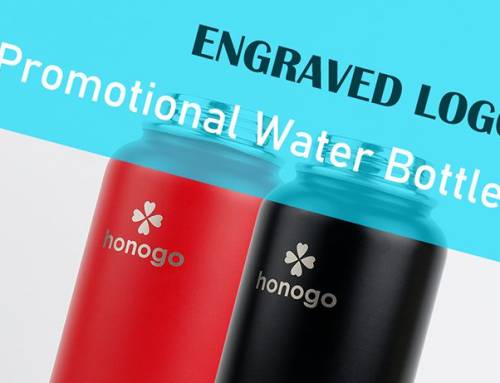
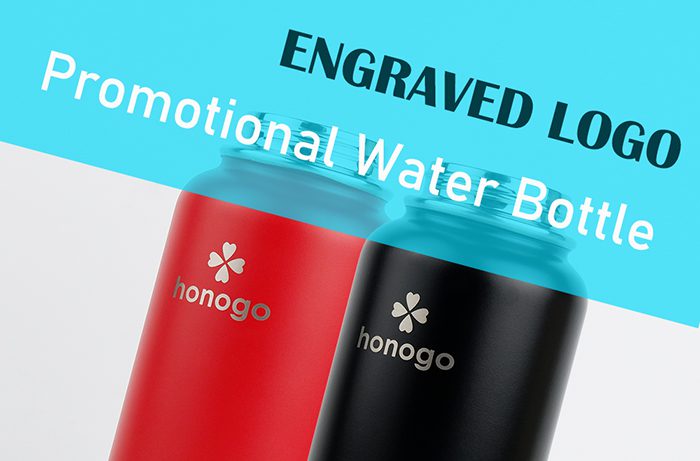
Multi-color silk screen printing and 3D UV printing logo looks great, but every color requires a separate setup fee and pass on the production line. The Strategy: Go for Laser Engraving. It’s usually a one-step process, it’s permanent (doesn’t peel), and it often costs less than complex printing. Plus, it looks premium.
Strategic Sourcing: Volume and Timing
Sometimes the savings aren’t in the bottle itself, but in how you buy it.
- The MOQ Math: Setup costs for machines are high. If you order 500 bottles, we have to amortize that setup cost over just 500 units. If you bump that to 3,000 units, the price drops immediately.
- Timing Matters: If you try to place an order in October (right before the holiday rush), you have zero negotiation power. Try ordering in the “off-peak” season—usually shortly after Chinese New Year or in early summer. Factories are hungry for work then and might offer better terms.
- Economic shipping method: many clients spent lots of time on sourcing, then leave less time for production and shipping. Finally they need to choose air shipping instead of sea shipping, which cost much higher shipping cost.
The “Hidden Cost” of Going Too Cheap
Here is the warning part. If a supplier offers you a price that seems too good to be true, they are likely cutting one specific corner: The Vacuum Process.
To make a bottle insulate, we vacuum seal the layers and test them. Cheap factories skip the 100% temperature test. They might only test 1 out of 50. If you buy the “cheapest” option, you might find that 10% of your bottles have no insulation at all. They will sweat and get hot to the touch.
A $3.00 bottle that works is always a better deal than a $2.50 bottle that fails.
Ready to Optimize Your Sourcing?
You don’t have to figure this out alone. We are a professional stainless steel water bottle supplier, and we know how to balance budget with quality.
Send us your current specification or target price. Our sales team will run a quick cost analysis and show you exactly where we can save you money—safely.