If you’re exporting stainless steel insulated water bottles to South Korea, getting your MFDS testing right is probably the single most important thing you need to nail. I’ve seen too many shipments held up at customs simply because the test report wasn’t up to spec — wrong lab, wrong signatory, or mismatched importer name. Let me walk you through what actually matters.
What Gets Tested — By Material
Your water bottle is made of multiple materials, and MFDS treats each one separately under the *Standards and Specifications for Utensils, Containers and Packages*. Here’s the breakdown:
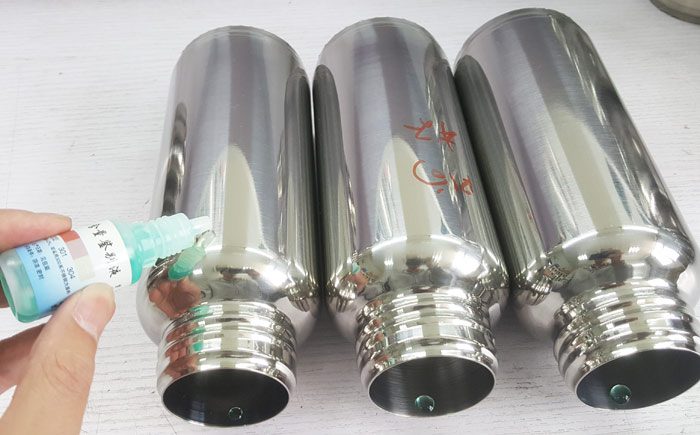
Stainless Steel Parts
| Test Category | Specific Item | Reference Limit |
| Heavy Metal Migration | Lead (Pb) migration | ≤ 0.01–0.05 mg/L (in 4% acetic acid) |
| Heavy Metal Migration | Cadmium (Cd) migration | ≤ 0.1 mg/L |
| Heavy Metal Migration | Nickel (Ni) migration | ≤ 0.1 mg/L |
| Heavy Metal Migration | Arsenic (As) migration (as As₂O₃) | ≤ 0.1 mg/L |
| Heavy Metal Content | Sum of Pb, Cd, Hg, Hexavalent Cr | ≤ 100 mg/kg |
| Total Migration | Total dissolution | Per MFDS standard method |
Important: MFDS Notice No. 2024-29 (issued June 21, 2024) **removed the total dissolution test method** from the metal material specifications and updated the arsenic quantitative analysis method. Make sure your lab is using the current version, not an outdated one.
PP Plastic Parts
| Test Category | Specific Item | Reference Limit |
| Total Migration | Overall Migration | Per MFDS standard |
| Specific Migration | Heavy metal migration | Per MFDS standard |
| Specific Migration | Plasticizers (DEHP, etc.) | DEHP ≤ 1.5 mg/kg |
| Chemical | Potassium permanganate consumption | Evaluates organic dissolution |
| Sensory | Odor, color bleeding test | No odor, no visible color bleeding after soaking |
Silicone Parts
| Test Category | Specific Item |
| Volatile Organic Compounds (VOCs) | Organic volatile content |
| Peroxide Residue | Residue level detection |
| Total Migration | Overall migration test |
| Sensory | Odor test |
Complete Unit Testing
Your finished water bottle also needs:
– Sensory test: No odor from the water after soaking materials at 60°C for 30 minutes.
– Color bleeding test: Wipe the surface with gauze — no visible color loss.
The testing method selects simulants (water, 4% acetic acid, 20% ethanol, n-heptane, etc.) based on the food type the material contacts.
You Must Use an MFDS-Designated Lab
This is non-negotiable. MFDS requires that testing for imported food contact materials be done at a designated Foreign Testing Laboratory (FTL). You can find the full list on the MFDS website: MFDS → Our Works → Management of Testing and Inspection Agencies → Foreign Testing Laboratory. As of November 2025, there are 54 designated foreign labs.
Some MFDS-designated labs you might recognize:
| Lab Name | Note |
| SGS | Authorized since 2009 (KFDA/MFDS), covers food packaging materials |
| KOTITI | MFDS-designated testing institute |
| Eurofins KCTL | MFDS official designated lab |
| KTR | MFDS official designated lab |
| Guangdong Jiexin Inspection & Certification Co. | FCM lab is a China national key lab, MFDS-recognized |
What Your Test Report Must Have — No Shortcuts
Here’s where things get specific. Korean customs will reject a report that doesn’t check all these boxes:
Lab Credentials
The report must clearly show:
– Lab’s full official name (in English or Korean)
– Lab address
– MFDS Designation Number
Authorized Signatory
The report **must be signed by an authorized technical manager who is registered with MFDS**. And I mean physically hand-signed — electronic signatures and digital reports won’t cut it for customs clearance. Paper original with a wet signature only.
Importer Name
This is a common trap. The importer name on your test report **must match exactly** what’s on your customs declaration. Even a typo will get flagged. So before you send samples to the lab, confirm the importer name with your Korean buyer or agent.
Language
The Certificate of Laboratory Testing should be in **English or Korean**. If your lab issues it in Chinese, you’ll need a notarized Korean translation.
Other Required Elements
MFDS-accepted reports also need:
– Sample information (name, model, material)
– Test standard (MFDS corresponding clauses)
– Test items, methods, and results
– Individual conclusions and overall compliance conclusion
– Lab stamps (CMA, CAL, and MFDS recognition stamp)
– Validity: 1 year from issue date — if your shipment happens after that, you’ll need to retest.
Certificate Cover Page
The cover of your Certificate of Laboratory Testing for customs clearance should include shipment details: quantity, loading port, shipping method, etc.
A Few Practical Tips
– Standards change — MFDS revises its standards regularly. Notice No. 2024-29 came out in June 2024, and there have been updates since. Always confirm the current version with your lab before testing.
– First-time imports usually require full-item testing** under the Food Sanitation Act.
– Failed samples need to be kept for 6 months.
– Talk to your lab ahead of time — discuss the test plan, confirm test items, simulant conditions, and report purpose before you send samples.
Ready to get your bottles into the Korean market?
At Hono, we’ve been manufacturing stainless steel insulated water bottles for years and we know the compliance game inside out. Whether you need help understanding the testing requirements, finding the right MFDS-designated lab, or just want to talk through your product specs — we’re here to help.
Check out our full range at https://honogo.com or reach out directly. We’ll make sure your bottles clear Korean customs without the headaches.
Got questions about MFDS testing for your specific product? Drop us a line — we speak fluent compliance.