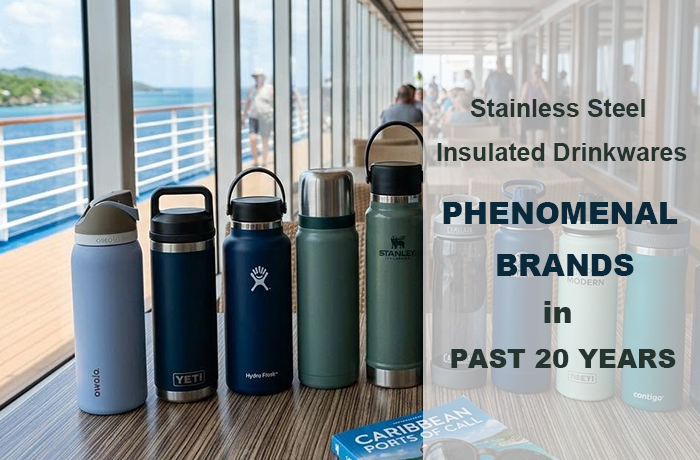
Twenty years ago, if you walked into a sporting goods store and ran your eye along the insulated bottle shelf, you saw maybe half a dozen names, and most of them looked like they belonged in a camping catalog. Stanley. Thermos. Zojirushi and Tiger if you were shopping in Asia. Good products, all of them. About as exciting as a thermos, though.
Walk into the same store today and the shelf looks like a cosmetics counter. Pastel colors, limited editions, sold out tags, people filming themselves in the aisle. Half the names didn’t exist twenty years ago. Hydro Flask started in 2009. Owala in 2020. YETI was still a cooler company in 2010. S’well came, conquered and cooled off. Stanley, a brand from 1913, had the biggest second act of all.
When we watch this cycle from the factory, the trade show and the Amazon listing. Buyers ask the same question every month: how did these brands get so big when the cup is not that different from what we make? Let’s look for the answer, plus the part nobody puts in the case study, which is where the cups are actually made.
The short version first.
| Brand | Started | Product breakpoint | What actually sold it | Where it stands now |
| Hydro Flask | 2009 | Wide mouth and standard mouth bottles | Color, stickers, wide mouth takes ice, TikTok | Mature. Still sells well, no longer sets the trend |
| YETI | 2006 | Rambler 20oz and 30oz tumbler (2014) | Bear proof coolers built the name, heavy steel, dealer network | The biggest of the five. About $1.1B in drinkware sales |
| S’well | 2010 | Teardrop 17oz bottle | Fashion shelves, Oprah, a $35 price tag | Part of Lifetime Brands now. Quiet |
| Owala | 2020 | FreeSip 24oz and 32oz | Two way lid, color drops, unboxing videos | Fastest growth. Number one online in 2025 |
| Stanley | 1913 | 40oz Quencher | A Utah blog, women buyers, one car fire video | The boom is over. Now going international |
Hydro Flask: the bottle that became a personality
Hydro Flask started in 2009 in Bend, Oregon, with Travis Rosbach and Cindy Weber. It began the way a lot of outdoor brands begin. Farmers markets first, then small shops, then the hiking crowd. The product was not magic. Double wall vacuum insulation, 18/8 stainless, a powder coat that does not slip in wet hands. TempShield, they call the insulation. Standard stuff now, slightly ahead of the curve then.
What made it different was the mouth. Hydro Flask pushed two shapes hard. The wide mouth takes ice cubes and is easy to scrub with a brush. The standard mouth is nicer to drink from on the move. Up to then, most vacuum bottles were built for coffee or soup. This one was built for cold water on a trail.
Then colors. Hydro Flask went from a couple of finishes to a wall of them, and the powder coating made each one look painted rather than plated. Add a sticker and the bottle starts saying something about who you are. That’s the point where a cup stops being a cup.
The business moved fast. Scott Allan took over as CEO in 2012, pushed into Europe, and by 2014 the company was past $2 million in annual revenue. In March 2016, Helen of Troy bought Hydro Flask for $210 million. Not a flask multiple. An aspirational brand multiple.
The peak came in 2019, when Hydro Flask turned up as a prop in the VSCO girl thing on TikTok. Scrunchies, oversized tee, a bottle covered in stickers. Nobody planned that. Sales jumped, the brand picked up a much younger customer, and every copycat in the world started shipping powder coated wide mouths.
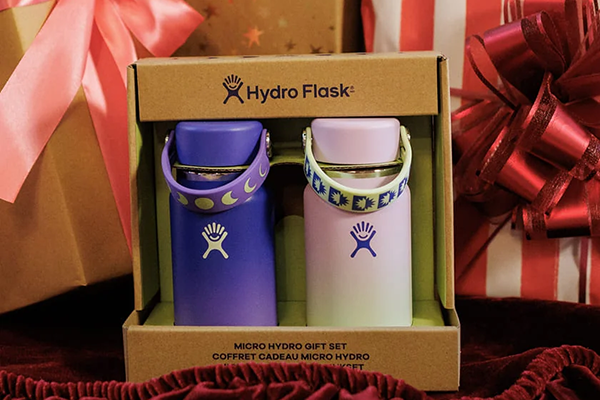
Then the market turned. By 2023, Helen of Troy’s own earnings calls were saying US consumers had shifted away from bottles and toward tumblers. The bottle that defined a decade got pushed aside by a cup with a handle. Hydro Flask answered with new shapes, the Micro Hydro line being the obvious one, plus soft coolers and totes, and the wide mouth still wins gear awards. But the brand is in its mature phase now. Profitable, respected, no longer the coolest thing in the room.
For people in this industry, this one is a good lesson in timing. The product did not change much between 2015 and 2020. The customer did.
YETI: from coolers to the tumbler men would actually carry
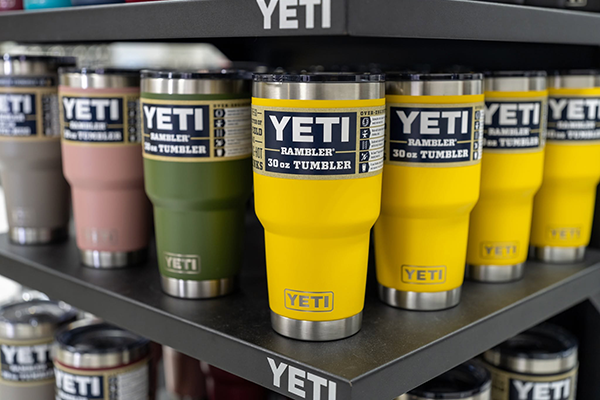 YETI is a strange case, because drinkware was never the plan. Roy and Ryan Seiders started the company in Austin in 2006, tired of coolers that cracked, and the first products were rotomolded boxes that cost more than a fridge. The Tundra series got certified bear resistant by the Interagency Grizzly Bear Committee. That one fact sold more coolers than any ad budget could have.
By 2012 the brothers had sold a two thirds stake to Cortec Group for $67 million, and the brand was already a status symbol among hunters and anglers.
Drinkware came in 2014, with the Rambler tumbler in 20oz and 30oz. On paper, a stainless cup with a lid. In practice it solved something nobody in the premium segment was solving. It keeps ice all day. It does not sweat on a desk. It fits a cupholder. It looks like it belongs on a job site. The MagSlider lid worked with one hand. The steel was heavy. The price was high, and that was the point. YETI had already taught its customer that $300 for a cooler was normal, so $40 for a tumbler was easy.
The other half is distribution. YETI sold through independent dealers, tackle shops and outdoor chains first, and those dealers sold the brand for it. Then direct to consumer, then Amazon, then its own stores. At its October 2018 IPO, priced at $18 a share, it was doing roughly a billion dollars a year.
Today YETI is the most stable of the group. Fiscal 2025 net sales came in at $1.87 billion, drinkware at $1.09 billion, well over half the business. US drinkware has gone flat, even slightly negative, but international grew 16%. That’s the pattern you would expect from a brand that has saturated its home market and is now buying growth in Europe, Australia and Japan.
No drama, no meltdown. Just a very good outdoor company that happens to sell a lot of cups.
S’well: the bottle that went to fashion week
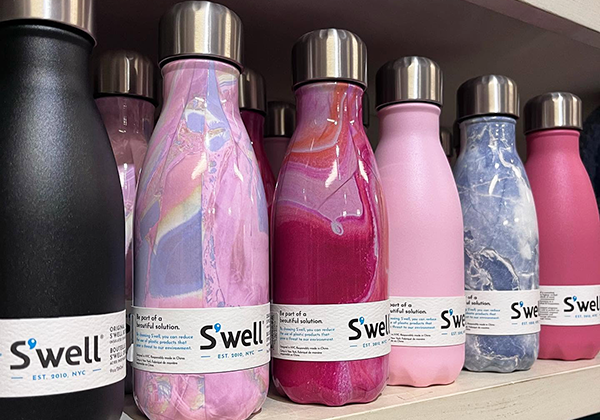 S’well is the cautionary tale, and the launch was brilliant.
Sarah Kauss founded it in 2010 in New York and did something nobody in the category had done. She designed the bottle as an accessory. Teardrop silhouette instead of a cylinder. Triple wall insulation. A finish that looked like a handbag rather than hardware. Then she put it where water bottles did not live, meaning Nordstrom and Bloomingdale’s. At $35 a bottle, when supermarkets were selling $8 ones, S’well was selling status.
It worked. Millions of bottles sold in the first half of the decade, a place on Oprah’s list, revenue that press reports put around $100 million at its peak, and a new idea in the industry. The reusable bottle as a fashion item. Every brand in this article owes S’well something for that.
The problem was the moat. There wasn’t one. The shape was copyable, the colors were copyable, and the triple wall construction was something any decent factory in Zhejiang could quote within a week. A lot of them did, for brands selling at half the price. S’well’s advantage was taste plus retail placement, and neither one is a patent. When Hydro Flask brought performance and a younger story, and YETI brought a tougher one, S’well’s shelf space started to look expensive for what it returned.
Kauss handed the CEO job to outside management in 2019 and became executive chairwoman. In March 2022 the business was sold to Lifetime Brands, the housewares group behind Farberware and Mikasa. Which is not a failure, by the way. Founders sell companies. But it tells you where S’well sits now. One label in a housewares portfolio, still selling, still pretty, no longer setting the agenda.
Fashion heat without a functional hook is rented. You don’t own it.
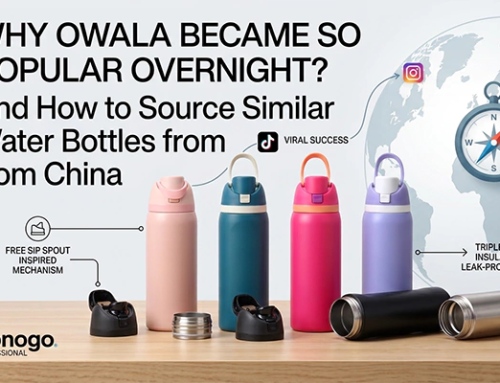
Owala: the lid that broke the tie
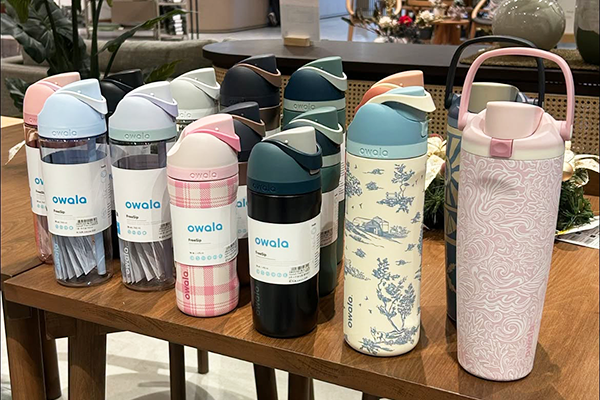 Owala is the newest, and the fastest rise I have seen in this industry. It launched in 2020 out of Trove Brands, the Utah company behind BlenderBottle.
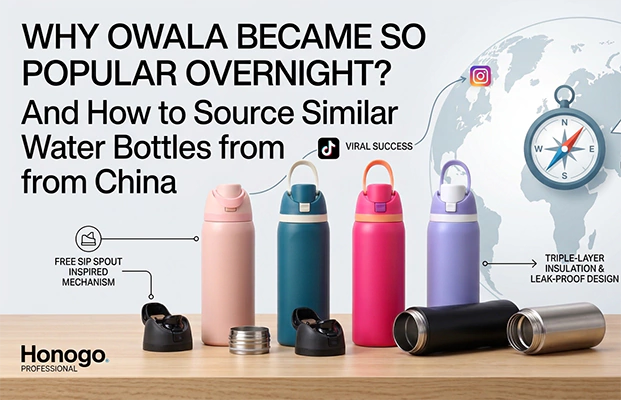
The founder story is simple and, I think, true. CEO Steve Sorensen watched a guy at the gym holding a straw cup in one hand and a regular bottle in the other, and asked why you have to choose. The team spent about 18 months on the answer, which became the FreeSip lid. A spout you can sip through a hidden straw, or tip back and chug, one hand, no leaks. Patented.
First month sales were around 16,000 units. Not a rocket yet. The rocket came later, from two things.
One, price and color. Owala sits around $30 to $38, below Stanley and roughly level with Hydro Flask, and it releases colors in drops, the way sneaker brands do. People collect them. People swap lids and bodies. A $35 cup becomes a small hobby, and hobbies get repeat purchases.
Two, the internet did the marketing. Owala spent little on big influencers and plenty on small ones, plus seeding product to ordinary users. On TikTok the #owala tag has passed 270 million views, and most of those videos are just somebody opening a box. Unboxing, color reveal, no talking. Cheap content, and it converts, because it looks like a friend showing you something instead of an ad. A membership program with early access to color drops does the rest.
By 2025 it was the top selling water bottle brand online in North America, ahead of Stanley, according to e-commerce tracking reported at the time. On Amazon, one FreeSip listing has been moving around 80,000 units a month. The lid also made TIME’s Best Inventions list in 2023, which is a credibility stamp money can’t buy.
Where does it go from here? The risk is obvious. A brand built on color drops has to keep dropping colors, and the category around it is cooling. But Owala is the only one of the five still in the steep part of the curve, and it got there by solving a genuine annoyance instead of inventing a lifestyle.
Stanley: the hundred year old brand that acted like a startup
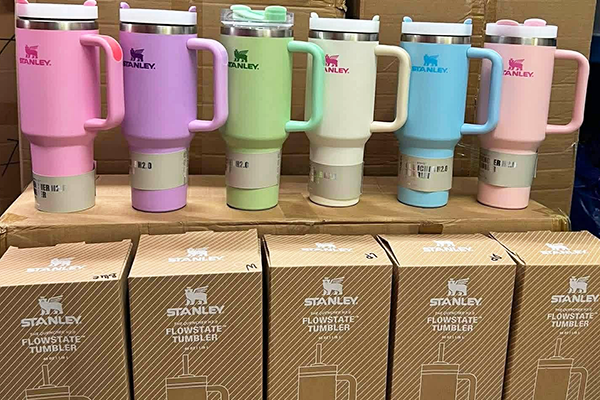 Put Stanley last on purpose, because Stanley is not a new brand and shouldn’t be sold as one. William Stanley Jr. invented the all steel vacuum bottle in 1913. The company spent most of the last century selling green thermoses to working men and did that well. PMI, the Seattle company, bought Stanley in 2002. Nobody would have called it a growth story.
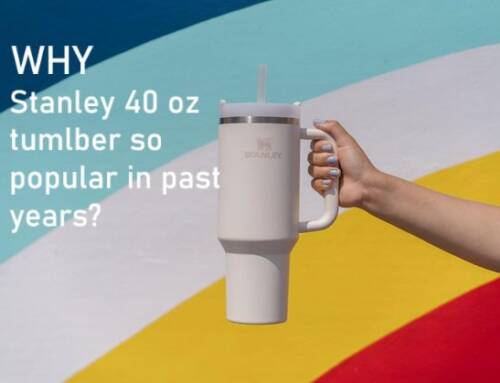
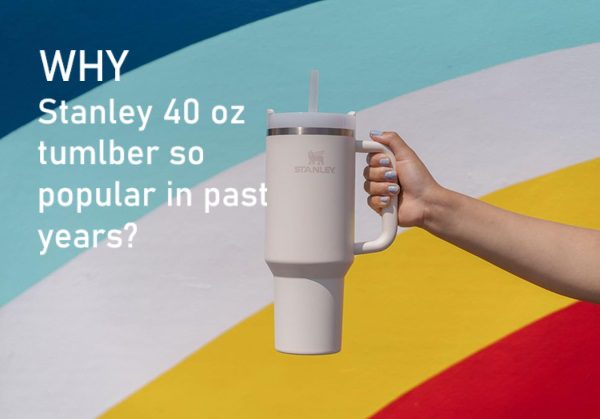
The 40oz Quencher is the product that changed everything, and the first attempt failed. It launched in 2016, sold poorly, and by 2019 Stanley had stopped restocking and stopped marketing it. The turnaround came from outside. A small Utah blog called The Buy Guide, run by three women, loved the cup, asked their readers to buy it, and sold about 5,000. Stanley noticed. Production restarted, colors multiplied, the company hired Terence Reilly, formerly of Crocs, as president in 2020, and Quencher sales rose 275% from 2020 to 2021.
The rest is the best documented marketing story in the industry. Revenue went from about $70 million in 2019 to $750 million in 2023. In November 2023 a woman’s car caught fire, everything inside burned, and her Stanley came out with ice still rattling in it. The video went everywhere, and the company offered to replace her car. Not long after, the Valentine’s edition at Target had people lining up before opening.
Two things made the Quencher work, and neither is insulation. First, it was designed for a use case the category had ignored. A big cup, a handle, a straw, fits a car cupholder, for people who sip water all day at a desk or in traffic. Second, it was sold to women, in colors, as fashion. The old Stanley customer was a plumber with a green thermos. The new one was a 24 year old with a pink cup on her desk, and she bought four more.
Then 2025 arrived. One market estimate has Stanley’s global share at 9.3% in 2024, up from about 4% in 2022. But sales of insulated containers at US sporting goods retailers fell every month from September 2024 to February 2025, and total US tumbler volume in March 2025 was down more than 20% year on year. Stanley is now pushing into the UK, Germany, Japan, Korea, China and Australia, adding coolers, bags and crossbody bottles, and signing partnerships with Messi and Barbie. Sensible moves. But the frenzy is over, and Stanley knows it.
So what do these brands have in common?
Strip out the colors and the celebrity posts, and the pattern is consistent.
**A hook you can explain in one sentence.** Wide mouth takes ice. Forty ounces, handle, straw, fits a cupholder. Teardrop shape. Sip or chug with one hand. If it needs a paragraph, it doesn’t spread.
**An ignition point.** Hydro Flask got TikTok, Stanley got a blog and a car fire, Owala got unboxing videos, YETI got a bear. None of those were ad campaigns.
**Distribution timed to the ignition.** Target endcaps, REI shelves, Amazon listings. A viral product with no stock is only a rumour.
**color as a subscription.** Drops and collaborations are the cheapest new product development there is.
**No manufacturing moat.** Every brand here is made in China, often in the same factories. Nobody owns a vacuum technology the next factory down the road cannot match. What they own is the design file, the trademark, the shelf position and the customer. That’s a marketing moat, not a manufacturing one.
The Chinese story behind all of this
China makes roughly 60% of the world’s vacuum flasks. The core of that production sits in a cluster in Zhejiang around Yongkang, Wuyi and Jinyun, an area so dense with flask factories that you can drive twenty minutes and pass a steel mill, a vacuum line and three powder coating shops. Industry surveys cited by the Chinese trade press put the cluster at over 70% of national output and exports, and say around 80% of the leading vacuum flask brands in Europe and America are made there on an OEM basis.
Yongkang alone has more than 2,900 flask and cup companies and suppliers, an output value above 31 billion RMB on local 2025 figures, and more than 600 million units a year. The chain covers everything from mold making to vacuum sealing, coating and packing. In the first quarter of 2026, China exported more than 5 billion RMB of vacuum flasks.
The names are not a secret in the trade. Haers, based in Yongkang and listed in Shenzhen, is one of the largest vacuum flask makers anywhere, exports to more than 80 countries, owns the Swiss brand SIGG, and supplies YETI, PMI and Owala. Jiayi, listed in 2021, has been the main Quencher supplier for PMI, with that one customer accounting for the large majority of its revenue. Its 2025 revenue fell 17% and profit fell 40%, which tells you exactly what happened when Stanley slowed down and worked through inventory. Tiger, the Japanese brand people still mention in the same breath as Zojirushi, has had bottles made in Yongkang too. The local exhibition hall will tell you so.
Which means the brands in this article all run on the same industrial base. When Stanley sells out a color in a week, a factory in Zhejiang already cut the mold. The brand owners keep the design direction, the marketing and the customer. The capability, the speed and the cost structure come from here.
This relationship is under pressure now, and I won’t pretend otherwise. US tariffs have pushed a lot of orders toward Vietnam and Thailand. Haers has plants in Thailand. Jiayi built a 13.5 million unit factory in Vietnam. Helen of Troy says it can dual source about 45% of its volume and wants 55%. Buyers are actively asking for a second country of origin, and any exporter who tells you otherwise is not being straight with you.
But shifts like this take years, not quarters. Vietnam and Thailand still import liners, lids and sometimes whole sub assemblies from Zhejiang. The tooling, the engineering and the deepest part of the supply chain stay here. For a buyer, the takeaway is simple. The same cluster that builds the $45 brand bottle will build yours, at your spec, at your price, with your logo on it. What you can’t buy from a factory is the story. That part you build yourself.
FAQ
**Which brand made the 40oz tumbler popular?**
Stanley. The 40oz Quencher was launched in 2016, nearly dropped in 2019, and took off after The Buy Guide blog pushed it and Stanley started releasing colors. By 2023 the shape was everywhere, and now every Chinese factory that makes tumblers has a version of it in the catalog.
**Are Hydro Flask, YETI, Stanley and Owala made in China?**
Mostly, yes. Hydro Flask bottles are made in China. YETI makes drinkware in China and the Philippines. Stanley’s Quencher comes largely from suppliers in Zhejiang. Owala is made in China too. Some production is moving to Vietnam and Thailand because of tariffs, but the tooling and most of the parts still come from the same Zhejiang cluster.
**What is the difference between a wide mouth and a standard mouth bottle?**
Wide mouth is about 2.2 inches across, so ice cubes go in and a bottle brush fits. Standard mouth is narrower and easier to drink from without a straw. If you are sourcing for a Western market, wide mouth still sells better.
**Why is Owala cheaper than Stanley?**
Owala sits around $30 to $38 for most bottles. Stanley’s Quencher is often $45 and up, and limited colors resell for much more. The gap is mostly brand premium and retail placement, not cost. The factory cost of a 40oz double wall tumbler from Zhejiang is a small fraction of either retail price.
**Can I get custom bottles with my own logo from a Chinese factory?**
Yes. That’s how a lot of private label brands get started. Stock mold plus your color, logo and packaging, MOQ usually 1,000 to 3,000 pieces depending on decoration. New molds cost more and take longer, so ask for the DFM review before you pay for tooling.
**How do I check that a supplier really uses 304 or 316 stainless?**
Ask for the mill certificate, then test yourself. A cheap stainless test solution on the inner wall will tell you within a minute if the liner is 201 instead of 304. Also check the vacuum performance after 24 hours with boiling water, and ask for the food contact test report, not just the factory’s own word.
About Hono Housewares
Hono is a stainless steel insulated drinkware supplier in Zhejiang, China. We have been doing custom OEM and ODM for overseas brands for more than fourteen years, and the range covers most of what this article talked about Vacuum flasks, hydro style bottles, cola bottles, 40oz tumblers with handle and straw, two way sip lids, coffee mugs, travel mugs, kids bottles, shaker bottles, food containers, insulated jugs. Around 60 new designs come out of our development team every year.
The custom chain is handled in house as far as possible. Mold, surface finish, printing, packaging, and the QC report that goes with the shipment. Our QC team follows an order from material input to final packing, and we test to the customer’s standard, not ours. If you have a drawing, a photo of a competitor’s cup, or only an idea on a napkin, that is enough to start.
Let’s talk about your next bottle
If you are sourcing stainless steel drinkware for the coming season, send us the shape, the size and the target price. We will tell you what is possible, what it costs, and how long it takes. No obligation, and no sales person calling you every day.
Tell us you read this article and mention the brand you are chasing. It saves us both a round of questions.