
Custom Drinkware Business Terms: MOQ, Samples, Lead Time, and Payment
Before you request a quotation, here are the terms that govern a custom drinkware order: minimum order quantity, sample policy and sample lead time, production lead time, artwork requirements, available colours, certification, and payment. The page is written for importers, distributors, and brand owners buying stainless steel bottles, tumbler mugs, and vacuum flasks from China, so you can price a programme and plan a launch date with real numbers instead of assumptions. If anything below does not match your project, tell us and we will quote the terms that do.
1. What is the MOQ?
It’s depended on what product you need. Usually our MOQ is 3000pcs. But we accept lower quantity for your trial order. Please feel free to tell us how many pieces you need, we will calculate the cost correspondingly. Hope you can place large orders after checking quality of our products and know our service.
2. What is the sample policy?
We would like to provide samples if customer pay for samples charge and freight charge. We will refund the samples charge to you after placing mass order. We usually send samples by FEDEX, UPS, or DHL. If you have carrier account, it will be fine to ship with your account, if not, you can pay the freight charge to our papal, and we will ship with our account. It takes about 3-8 days to reach.
3. What’s the sample lead time?
For existing samples, it takes 2-3 days, and 3-6days shipping time by Express. If you want your own logo printed or engraved, it takes 5-7 days; If you want to customize the sample color, it will take 10-14days.
4. How long is the production lead time?
It takes 30-40 days after you doing deposit payment for your order. We have large production capacity, which can ensure fast delivery time even for large quantity.
5. What format of the file do you need if I want my logo printed?
We have our own designer in house. So you can provide JPG, AI, cdr or PDF, etc. The artwork in .ai format is the best for us to arrange printing. And we will provide printing sample photos for your final confirmation before mass-production.
6. What colors are available?
We match colors with Pantone Matching System. So you can just tell us the Pantone color code you need. We will match the colors. Or you may send us a color sample as a reference.
7. Do your products pass FDA, and LFGB testing?
All of our products are made of food-safe stainless steel, silicon and plastic. So our products can pass the testing of FDA, LFGB, REACH.
8. What is your payment term?
Our normal payment term is T/T 30% deposit to start production, and 70% against B/L copy. We also accept L/C at sight if the order amount more than $10000.
FAQ about products materials
Q: What is stainless steel?
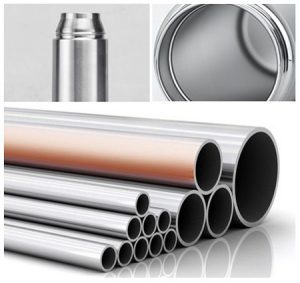
A: Stainless Steel is defined as an iron-carbon alloy with a minimum of 10.5% chromium content. The name originates from the fact that stainless steel does not stain, corrode or rust as easily as ordinary steel. There are many different types of stainless steel, austenitic, or 300 series stainless is alloyed with 18% chromium and 8% nickel, which makes it resistant to corrosion. We use a premium sanitary-grade commonly known as type 304 18/8 and is used for many food grade applications; it will not leach chemicals, stain, corrode or rust.
Q: What type of stainless steel do you use?
A: We use stainless steel type according to our clients’ demand. We recommend use 304 s/s for inner and outer both. If you have limited budget, we can make 304 s/s inner and 201 s/s outer for you, which can also pass food safe certificate like FDA, LFGB. Because only inner layer contact drinks inside.
Q: Why use a stainless steel drinking container instead of polycarbonate?
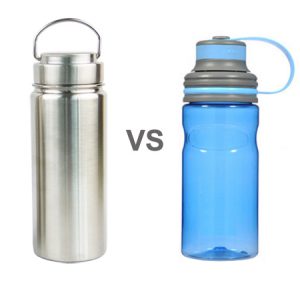
A: Stainless Steel water bottles are an attractive alternative to polycarbonate or lacquer lined aluminum drinking bottles, both of which contain varying amounts of biphenyl-A (BPA), a building block chemical necessary to make polycarbonate containers. There are increasing levels of scientific and consumer concern about the health risks posed by BPA, a known endocrine disrupter that mimics the human hormone estrogen. An increasing number of studies and accompanying media reports on BPA, have detailed concerns based on recent “low-dose” studies which postulate that polycarbonate containers could be leaching BPA into liquids and foods. In conclusion, stainless steel drinking containers are a proven alternative to polycarbonate bottles for consumers who have concerns about BPA.

Q: Do your stainless steel drinking containers have an inner BPA based lacquer coating like aluminum ones?
A: No, our containers are made of premium type 304 18/8 stainless steel which is used for many food and medical applications; it will not leach chemicals, stain, corrode or rust.
Q: Do your drinking containers contain Phthalates or PVC?
A: No. Our internal and independent external tests under the US FDA, EU and Cal. Prop 65 protocols have found no measurable traces of these chemicals.
Q: How do I know your Stainless Steel drinking containers meet International Food Container Standards?
A: We bring a focused approach to ensuring that our testing and quality processes are your assurance of the integrity of our products. We do this through a comprehensive chain of custody which in plain English means having ongoing monitoring processes to ensure we are delivering drinking containers that meet international food grade standards. Our containers are subject to internal tests backed up by testing from an independent company, SGS, to US FDA, European Norm and California Prop 65 food container standards.
Q: What is the plastic on your drinking containers made of?
A: We use a #5 food grade polypropylene (pp) in the lids and collars; #5 PP is a plastic with good durability and no known leaching characteristics The #5 PP parts are subject to internal batch testing combined with testing by an independent agency, SGS, to US FDA and European Norm (EN) food container standards.
Q: What about the nickel content in stainless steel; are there health issues?
A: The Agency for Toxic Substances and Disease Registry (ATSDR), a department of the U.S. Dept. of Public Health and Human Services notes that health issues related to nickel are determined by the manner and degree of exposure; about 10 to 15% of the population are susceptible. The ATSDR notes that exposure may arise from handling high nickel content products such as poor quality jewelry, coins or from inhaling dust near nickel industries. The most common reaction to handling nickel is a skin rash at the point of contact. Our containers are made from a tested food grade type 304 stainless steel with approximately an 8% nickel content; a much lower level than the items that the ATSDR have noted as causing health issues to those susceptible.
Q: What is the odor I may smell inside the container when it is new?
A: This is the smell of the food grade silicone used in the sealing rings; silicone is an inert substance. Washing the container in a solution of baking soda and warm water with a thorough rinsing will remove any trace of odor.
Q: Can I put hot liquids in my single wall stainless steel bottle?
A: No. Our single wall containers provide no insulation and present a burn hazard if used with hot liquids. Consider one of our insulating vacuum bottles for use with HOT liquids.
Q: Will the stainless steel react with acidic beverages like juice?
A: No, stainless steel will not react, however it is not recommended that acidic beverages be stored in a stainless container for long periods of time. If you do, we recommend cleaning them using a bristle brush and a solution of white vinegar and baking soda prior to washing again in hot soapy water, rinsing well and then drying.
Q: Are your stainless steel drinking containers dishwasher safe?
A: Yes, the BPA-Free, food grade number 5 polypropylene (pp) may be washed in the top rack of home dishwashers, however we suggest hand washing in hot soapy water, rinsing well and then drying will result in the maximum useful life of your container.
Q: Can I put my stainless steel container in the freezer?
A: No. The swelling associated with freezing may result in the seal on the threaded collar being compromised with leaking as a result.